The “Parking Lot List” Method: Remember Random Thoughts Without Losing Focus
Stop forgetting great ideas mid-task. Use a tiny “parking lot list” to capture thoughts fast, then review them at the right time—without derailing your focus.
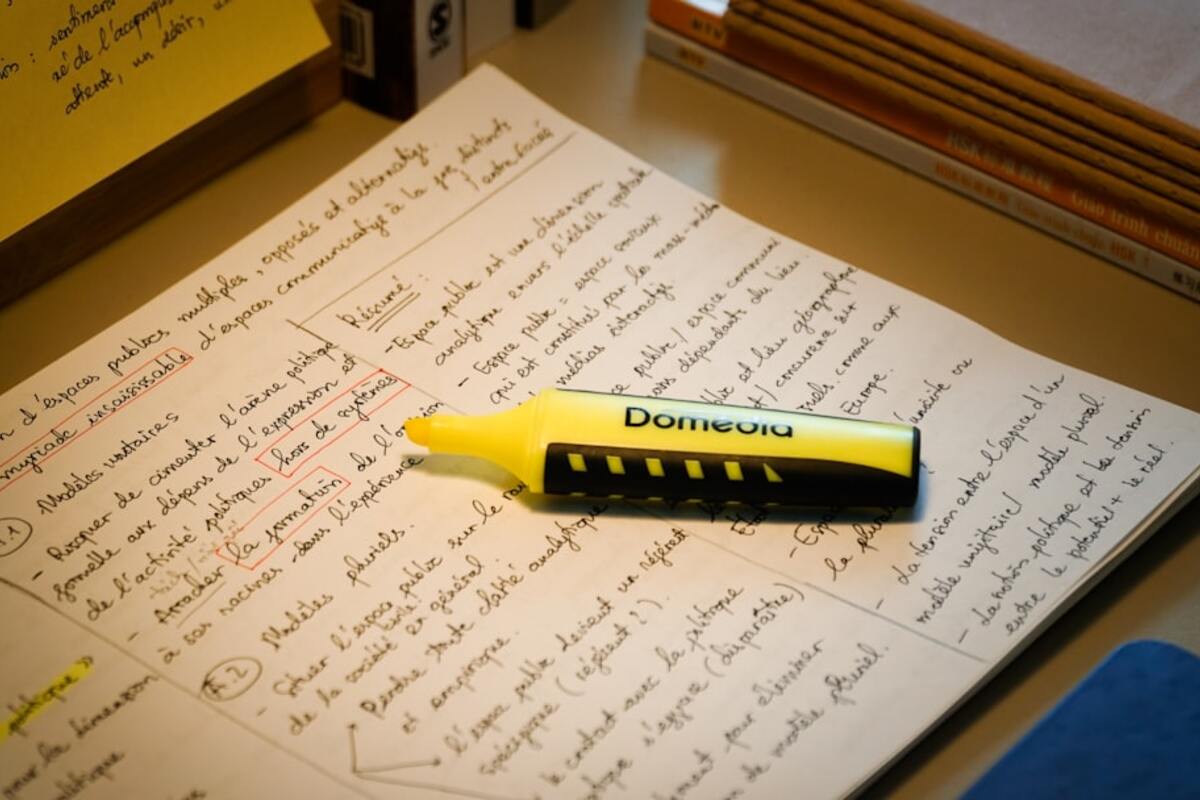
- Capture distracting thoughts in 10–20 seconds so you can return to what you were doing
- Use a consistent format and review time so your list becomes trusted (not a graveyard)
- Turn parked items into clear next actions with a quick triage routine
Why your brain keeps interrupting you (and why it’s not a personal flaw)
You’re answering an email and suddenly remember you need to book a dentist appointment. Or you’re cooking and a work idea pops up that feels too good to forget. Or you’re reading and your brain whispers: “Don’t forget to buy batteries.”
In those moments you usually do one of two things:
- Follow the thought (open a new tab, send a message, start a note) and lose your original thread.
- Fight the thought (“I’ll remember later”) and then… you often don’t.
The problem isn’t that you’re “bad at focusing.” It’s that your brain is doing what it’s designed to do: protect you from forgetting something that might matter. When a thought feels important, your mind tries to keep it active by replaying it. That replay steals attention from the task you actually chose.
The Parking Lot List is a small learning-friendly habit that solves this by giving your brain a safe place to store “not-now” thoughts. The key is that it’s not a full to-do system and not journaling. It’s a quick capture tool that reduces mental clutter so you can keep learning, working, or enjoying what you’re doing.
Think of it like putting a coat on a hook by the door. You’re not throwing it away. You’re not wearing it all day. You’re placing it somewhere reliable so you can move freely.

How the “Parking Lot List” works (and how to set it up in 3 minutes)
A Parking Lot List is a single, consistent spot where you “park” thoughts that are useful but distracting. It can be a paper sticky note, a small notebook page, or one pinned note on your phone. The format matters less than the reliability: you should know exactly where to put the thought every time.
The two rules that make it work:
- Capture fast. One line. No organizing. No perfect wording.
- Review on purpose. If you don’t review it, your brain won’t trust it and will keep interrupting you.
Here are three easy setups—choose one:
- Paper (best for deep work): One sticky note or index card next to your keyboard titled “PARKING LOT.”
- Phone (best for on-the-go): One pinned note titled “Parking Lot (Today).”
- Computer (best for office tasks): One always-open text file or note panel titled “PARKING LOT.”
What you actually write should be short enough that it doesn’t become a mini project. Use one of these templates:
- Task: “Call dentist — ask about cancellation list”
- Question: “Why does sourdough rise more slowly?”
- Idea: “Training: make 5-min cheat sheet for new tool”
- Reminder: “Batteries: AA for remote + smoke alarm”
- Worry loop: “Ask manager: priority for Project X vs Y”
If you want an even faster version, use a shorthand code at the start:
| Code | Meaning | Example |
|---|---|---|
| T: | Task to do | T: book dentist appointment |
| Q: | Question to learn later | Q: what is "phantom vibration" and why does it happen? |
| I: | Idea to develop | I: simplify onboarding email with a 3-step checklist |
| W: | Worry to address | W: confirm meeting time zones before sending invite |
Real-life scenario: You’re watching a tutorial to learn Excel shortcuts. Two minutes in, you remember you need to reply to a message. Instead of switching apps, you write: “T: reply to Sam about Friday.” Then you keep watching. Your brain relaxes because it has proof the thought is saved.
That’s the core. The rest is making it dependable.
Make it stick: the 5-minute “triage” that turns parked notes into real progress
The Parking Lot List works best when it’s paired with a tiny review ritual. Without this, the list can become a place where thoughts go to disappear—at which point your brain starts interrupting you again, because it doesn’t trust your system.
Pick one review time and keep it simple. Good options:
- End of your work session (before lunch, end of day)
- After your learning block (after a course lesson, after a chapter)
- Evening reset (right before you relax)
Then do a fast triage. You’re not “getting everything done.” You’re deciding what each item is.
The 5-minute triage steps:
- Delete or dismiss anything that no longer matters. (A lot won’t.)
- Convert vague notes into a next action. “Dentist” becomes “Call dentist at 9:00; ask for cancellation list.”
- Place the action where it belongs: calendar, to-do list, shopping list, or a “Questions to Explore” note.
To keep triage quick, use this decision guide:
Do it during triage (not during your focused task). This keeps your learning/work block protected while still letting quick wins happen.
Move it to a single running note called “Curiosities” or “Research Later.” When you have free time, you can pick one question and enjoy learning without breaking your current flow.
That’s a signal it needs a real decision. During triage, turn it into either a scheduled time (“Friday 10:00—handle it”) or a clear next step (“Email Alex with one question”). Repeated thoughts usually mean “unfinished decision,” not “bad focus.”
Mini example (from messy to clear):
- Parked note: “Taxes”
- Triage conversion: “Find last year’s PDF + make a folder called 2026 Taxes”
- Placement: Calendar Saturday 11:00 (30 minutes) or To-do list “Create 2026 Taxes folder”
How this helps learning (not just productivity): When you study, practice a skill, or read something new, your attention is the “workbench” where ideas get assembled. Interruptions knock pieces off the table. A Parking Lot List protects that workbench. It also creates a small trail of questions and ideas you can explore later—so your curiosity doesn’t get punished for showing up at the wrong time.
Common pitfalls (and quick fixes):
- Pitfall: You write full paragraphs and lose 10 minutes.
Fix: Force one line per thought. If you need more, write a keyword plus one verb: “Budget—set categories.” - Pitfall: You have five different parking lots (notes app, email drafts, scraps of paper).
Fix: Choose one “official” spot for the next 7 days. - Pitfall: You never look at the list again.
Fix: Attach triage to an existing habit: shutting down your laptop, making tea, or setting tomorrow’s alarm.
A relaxed way to start today: Put a sticky note next to you and label it “PARKING LOT.” For the next hour, every time your brain tosses you a side quest, write one line and return to your task. At the end of the hour, take three minutes to circle the one item that actually deserves action.
Over time, this method does something subtle but powerful: it teaches your attention that you’re trustworthy. You don’t ignore important thoughts, and you don’t let them hijack the present. You simply give them a place to wait.